| ||||||||||



Dr. Ronald P. Rogers CHIROPRACTOR Support for your body's natural healing capabilities 270-384-5554 Click here for details 






 





Columbia Gas Dept. GAS LEAK or GAS SMELL Contact Numbers 24 hrs/ 365 days 270-384-2006 or 9-1-1 Call before you dig 
Visit ColumbiaMagazine's Directory of Churches Addresses, times, phone numbers and more for churches in Adair County Find Great Stuff in ColumbiaMagazine's Classified Ads Antiques, Help Wanted, Autos, Real Estate, Legal Notices, More... 




|
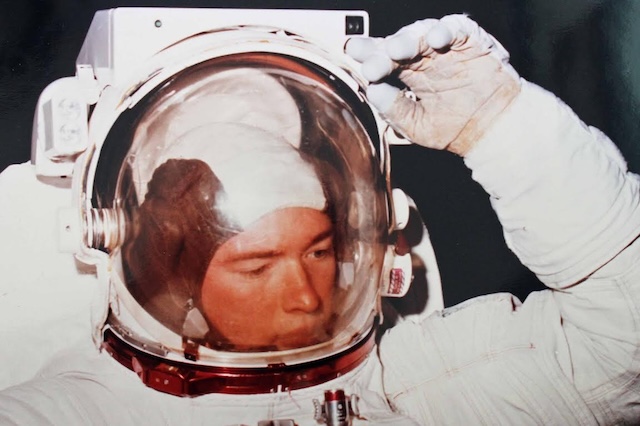
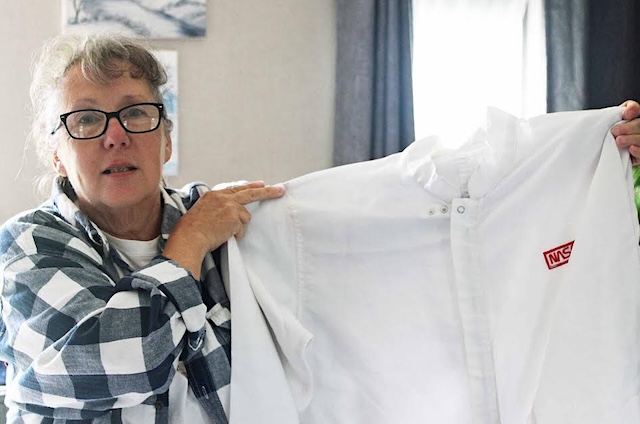
Glens Fork family honors NASA pioneer By Mig Feuser / The Adair Progress Earlier this month, NASA announced that Kentucky-born astronaut Randy Bresnik, a native of Fort Knox, will command the Artemis III mission, one of the agency's next major steps toward returning humans to the Moon. But long before today's Artemis missions, a member of a local family helped make America's earliest space flights possible. Lisa Ogden from Glens Fork recently shared a collection of artifacts and family memorabilia connected to her late uncle, Kenneth Alford Hoagland, an optical engineer whose work contributed to NASA's manned space program from the Mercury era through the Space Shuttle years. Among the items preserved by the family are engineering drawings, photographs, mission memorabilia, a NASA clean-room suit and documents connected to Hoagland's work with Fairchild Weston Systems, one of the companies involved in developing specialized camera systems for spaceflight. According to Ogden, her uncle worked on the development of cameras mounted inside astronauts' helmets, allowing mission control and the public to see what astronauts were seeing during their flights. "He was an optical engineer," Ogden said. "After the camera for the space helmet, he went on to do night vision goggles in military applications for years." The helmet camera systems represented a small but critical part of the enormous engineering effort behind America's space program. While rockets and astronauts often received most of the public attention, thousands of engineers worked behind the scenes designing the countless components necessary for successful missions. "Nobody thinks how many of these small parts are in there," Ogden said while examining some of the engineering materials her uncle left behind. One photograph in particular surprised the family when they recently took a closer look at it. "For years, we just assumed it was some technician," Ogden said. "Then we found out it was John Glenn." The image shows astronaut John Glenn in his Mercury pressure suit before his historic 1962 Friendship 7 mission, the first American orbital spaceflight. Beside the photograph is documentation indicating that one of the camera systems developed by Hoagland's team may be visible in the image. For Ogden, however, the artifacts are more than pieces of aerospace history. They are reminders of a beloved uncle who played a major role in her childhood. Her grandfather, John Hoagland, and Kenneth Hoagland were brothers. When her grandfather passed away during the 1970s, Uncle Ken effectively became a grandfather figure to the younger generation of the family. "My grandfather passed in the '70s, so Uncle Ken was like Grandpa," Ogden recalled. Although the family lived near Houston while Hoagland lived in New York, they remained close. One of Ogden's strongest memories is a family visit to the Johnson Space Center during the Space Shuttle era. She remembers her uncle arranging a tour of the facility, giving the family a glimpse into a world that few people ever experienced firsthand. "We thought we were royalty because Uncle Ken was working on it," she said. Among her memories is seeing the enormous crawler-transporter used to move rockets from the assembly building to the launch pad. As a child, she remembered watching the giant machine inch across the landscape so slowly that it seemed almost motionless. "It was actually walking across the tarmac when we were there," she said. "But it was like, 'Is it moving?'" She also remembers seeing one of NASA's crew capsules up close and being surprised by its small size. "It was really cool to see how small it actually is," she said. "I would think that impact hitting the water, even with the parachute, would still be bone-jarring." The collection Hoagland left behind includes a white NASA clean-room suit once used in controlled environments where delicate spacecraft components were assembled and tested. Although the suit no longer carried any operational purpose after his retirement, Hoagland gave it to family members, who later found creative uses for it. Ogden said the suit even appeared during a church Vacation Bible School program themed around space exploration. Today, the family continues to preserve the items as part of its history. Alongside the NASA artifacts are extensive family genealogy records tracing the Hoagland family's roots back through Sweden and even into France during the 1600s. Together, the documents tell two stories at once: one of family heritage and another of America's journey into space. As NASA prepares for the next generation of lunar exploration through the Artemis program, the artifacts serve as a reminder that the success of every mission depends not only on astronauts but also on the engineers, technicians and innovators whose names rarely appear in history books. For Lisa Ogden, Kenneth Hoagland was one of those people. His work helped astronauts carry cameras into space, helped military personnel see in the dark through advanced night-vision technology, and left behind a tangible connection between a local family and one of humanity's greatest adventures. And while Kentucky now celebrates new connections to NASA through astronauts such as Randy Bresnik and astronaut candidate Erin Overcash, another chapter of the Commonwealth's space history has been sitting quietly in a family collection all along. This story was posted on 2026-06-22 07:57:08
Printable: this page is now automatically formatted for printing.
Have comments or corrections for this story? Use our contact form and let us know.
More articles from topic News:
Saturday Session: Genealogy Research Class on June 27 Independence on the Grounds Celebration Columbia 4th of July events Video: Fossils in Kentucky Video: Right Here, Right Then, In Columbia Mark Twain Storytelling Festival: Speaker Schedule Commodities Distribution for Seniors on June 19 Summer Feeding meal pick up moved to Friday City will host food trucks again in July KELC releases May 2026 unemployment report View even more articles in topic News |
 

115 Jamestown St. Columbia, KY. 270-384-2496 


 




 
 








|
||||||||
|
| ||||||||||
|
Quick Links to Popular Features
Looking for a story or picture? Try our Photo Archive or our Stories Archive for all the information that's appeared on ColumbiaMagazine.com. | ||||||||||
|
Contact us: Columbia Magazine and columbiamagazine.com are published by Linda Waggener and Pen Waggener, PO Box 906, Columbia, KY 42728. Please use our contact page, or send questions about technical issues with this site to webmaster@columbiamagazine.com. All logos and trademarks used on this site are property of their respective owners. All comments remain the property and responsibility of their posters, all articles and photos remain the property of their creators, and all the rest is copyright 1995-Present by Columbia Magazine. Privacy policy: use of this site requires no sharing of information. Voluntarily shared information may be published and made available to the public on this site and/or stored electronically. Anonymous submissions will be subject to additional verification. Cookies are not required to use our site. However, if you have cookies enabled in your web browser, some of our advertisers may use cookies for interest-based advertising across multiple domains. For more information about third-party advertising, visit the NAI web privacy site.
| ||||||||||